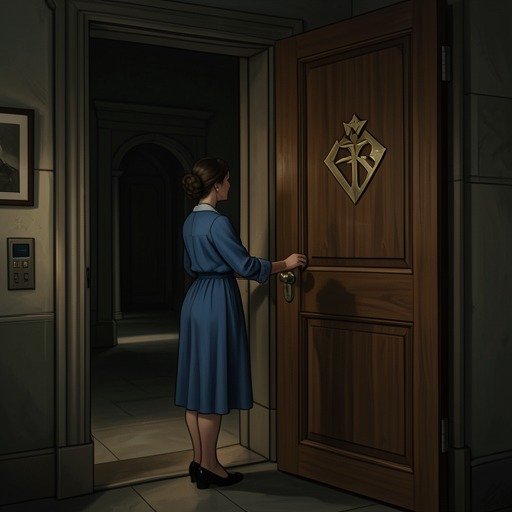
The Destruction of Dunwich Dungeon
Cinnamon BunThe Destruction of Dunwich Dungeon is the central rupture behind the crisis at Dunwich. What begins as a pattern of unexplained mana fluctuations becomes the confirmed destruction of a dungeon, the snapping apart of the local ley lines, the disappearance of an adventuring party, and the threatened evacuation of the settlement. The event establishes that a dungeon is not an isolated site but part of a wider magical and political environment whose collapse can endanger an entire community.
Causes and Warning Signs
The disaster is preceded by increasingly alarming reports from Overseer Hardy. Local mages, including an alchemist, detect fluctuations in mana, while no one sees the adventuring party sent to the Dunwich dungeon. A later report records larger mana shifts and Hardy’s personal concern that someone may have damaged the dungeon core. The guards also spot a person dressed in green in the forests, raising the possibility of Imperial activity so far from the expected front. Hardy responds by doubling the guard rotation and sending a scout to the dungeon, linking the magical disturbance to both a possible internal catastrophe and an approaching military threat.
The reports make the dungeon core the suspected point of failure before the destruction is confirmed. This matters because the dungeon is treated as an active structure within the region’s magical order rather than merely as a dangerous ruin. The uncertainty surrounding the missing adventurers and the suspected damage to the core gives the event a double character: it may be an accident, an assault, or the consequence of an expedition that went catastrophically wrong. The available record does not identify the immediate agent responsible, but it clearly establishes the core’s damage as the crisis’s suspected mechanism.
What Happens
By the report dated Ninth of Harvest, the Dunwich dungeon has been destroyed. Hardy identifies the accompanying mana shifts as the ley lines snapping apart, providing the first firm explanation for the earlier disturbances. The destruction therefore produces more than a physical ruin: it tears apart the magical pathways that had helped sustain the local environment and makes the region’s mana itself unstable.
The adventuring party sent to investigate never returns, and the report gives no account of its fate. The only surviving member connected with the expedition is its bard, who remains in a cell and is to be released later. Later discussion identifies Bonesy as that bard, revealing that the cheerful undead companion encountered in the present once belonged to an adventuring group associated with Dunwich. The discovery turns an archival mystery into part of Bonesy’s personal history, while also preserving the loss of the rest of the party as an unresolved consequence of the dungeon’s destruction.
Immediate Consequences
The destruction makes evacuation unavoidable. Hardy speaks with the mayor, who does not want to abandon Dunwich, but the combination of nearby Imperials and mana turning unstable leaves the settlement with no safe alternative. Additional Imperial sightings make the danger political as well as magical: civilians may be caught between a collapsing magical landscape and an armed power moving through the region. The surviving reports end abruptly after Hardy hopes that a civilian group will be allowed to pass unharmed, followed by blank pages. That broken record gives the catastrophe an unfinished aftermath; the reader receives confirmation of the dungeon’s destruction but not a complete account of Dunwich’s evacuation or final fate.
The event also changes how the protagonist understands the world. The reports introduce ley lines as the hidden infrastructure of magic and show that mana can be sensed, shifted, damaged, and turned dangerous. Later encounters reinforce the same environmental logic. Cleaning magic can destroy a ghost, the Wonderland Dungeon has a dungeon core, and a new quest announces that evil roots have infected dungeons across Dirt. Two-Lipped Tulips likewise seek areas containing rot-aspect or negative mana and can slowly purify them, suggesting that the destruction at Dunwich belongs to a broader pattern of magical contamination and ecological imbalance rather than standing alone.
Narrative Significance
The Dunwich disaster is the book’s early demonstration that curiosity about dungeons carries consequences beyond personal adventure. The protagonist initially finds the idea of a dungeon exciting and wonders whether the local mana is thick or thin, but the reports immediately place that wonder beside missing explorers, a damaged core, threatened civilians, and Imperial pressure. Adventure is thus reframed as participation in systems that can fail on a regional scale.
The event also establishes a recurring contrast between cleansing and destruction. Cleaning is presented as a skill whose effectiveness improves with rank, and its magic can violently burst apart a ghost; yet the destruction of Dunwich Dungeon is not a simple act of purification. It damages the ley lines and turns the surrounding mana unstable, showing that removing or breaking a magical structure can produce consequences as dangerous as the corruption it was meant to contain. The later quest to prune evil roots and destroy remaining infected growths extends this tension: the world requires intervention, but intervention must contend with the scale and interconnectedness of magical systems.
Finally, the destruction gives Bonesy’s later presence an ironic depth. The reports treat the bard as a detained remnant of a failed expedition, while the protagonist interprets his survival with amused approval and disappointment at his behavior in death. Dunwich therefore links the book’s playful encounters with a grave historical absence. Behind the jokes about an ill-behaved bard stands a destroyed dungeon, a vanished adventuring party, broken ley lines, and a settlement forced to confront the collapse of the world around it.